When Nature Becomes the Classroom
How Camping to Connect Is Fighting Teen Social Isolation Among Young Men of Color
Editor’s Note from Camping to Connect
At Camping to Connect, we believe connection is not a luxury. It is a protective factor, a healing practice, and a pathway toward belonging, emotional wellness, and leadership.
We are honored to share this article written by Bridget Johnson, founder of Deans’ Roundtable and host of The Table podcast, following her recent conversation with our founder, Manny Almonte.
Bridget’s piece captures the deeper philosophy behind our work: how nature, mentorship, vulnerability, and brotherhood can help address the growing crisis of loneliness and disconnection impacting young men of color.
We are sharing this article with our community in the spirit of amplification, reflection, and collective action.
The Isolation Crisis Schools Can’t Ignore
Teen social isolation is not a new topic in education circles, but the scale of the problem has reached a level that demands more urgency from school communities.
In a recent episode of The Table, I sat down with Manny Almonte, founder of Mastermind Connect and the BIPOC-led nonprofit Camping to Connect, and what he described is something educators need to hear directly.
“It’s already named as an epidemic,” Manny said plainly. “There’s plenty of research that supports it, and it goes beyond youth. It’s affecting adults, too.”
For young men of color in urban communities, the isolation is compounded by factors that go well beyond screen time. Manny described a landscape shaped by political and social divisions, the erosion of the village model of community, families dispersed by economic opportunity, and an environment in which expressing vulnerability as a young man has historically come with real social consequences.
When you add the manosphere’s growing influence on adolescent boys and the false validation loop of social media, you have a generation of young men who are emotionally isolated, highly guarded, and increasingly without trustworthy adult relationships to anchor them.
Schools sit at the center of this picture. Whether they are ready for it or not, they are often the last shared community space many of these boys have.
Why Brotherhood Has to Be Modeled First
What makes Camping to Connect’s approach distinct is that it did not start with youth programming. It started with men doing the work on themselves.
Manny’s Mastermind Connect began around 2015 as an accountability group for adult men who realized they had been conditioned to compete rather than connect.
As he described it, these men would show up for each other performing success: talking about salaries, cars, wins, while avoiding anything real.
“We don’t talk about what’s really happening behind the curtain,” he said.
When those same men brought their work into communities of young people, they were not coming in as authority figures running a program. They were coming in as men who had done the hard thing themselves and could speak to it honestly.
This matters enormously in school settings.
Manny made a point that resonates with what student life professionals see all the time: young men of color, particularly in urban communities, have very good reasons to distrust authority figures at school. Counselors, principals, and teachers have historically, and in lived experience, been positioned in opposition to these boys rather than alongside them.
The result is that when something is wrong, young men retreat inward or turn to peers who are navigating the same storm without a compass.
The Camping to Connect model flips this by placing men who share participants’ cultural and lived experiences directly in mentorship roles.
“There’s no code-switching,” Manny explained. “We understand where these kids come from. There’s no shame in that space.”
What the Outdoors Does That a Classroom Cannot
One of the most compelling arguments Manny made was about why nature specifically became the vehicle for this work.
He put it simply:
“Healing happens through connection. Nature is a great equalizer.”
When there is no cell reception, no social media, and no performance to maintain, the defensive architecture adolescent boys build around themselves begins to come down.
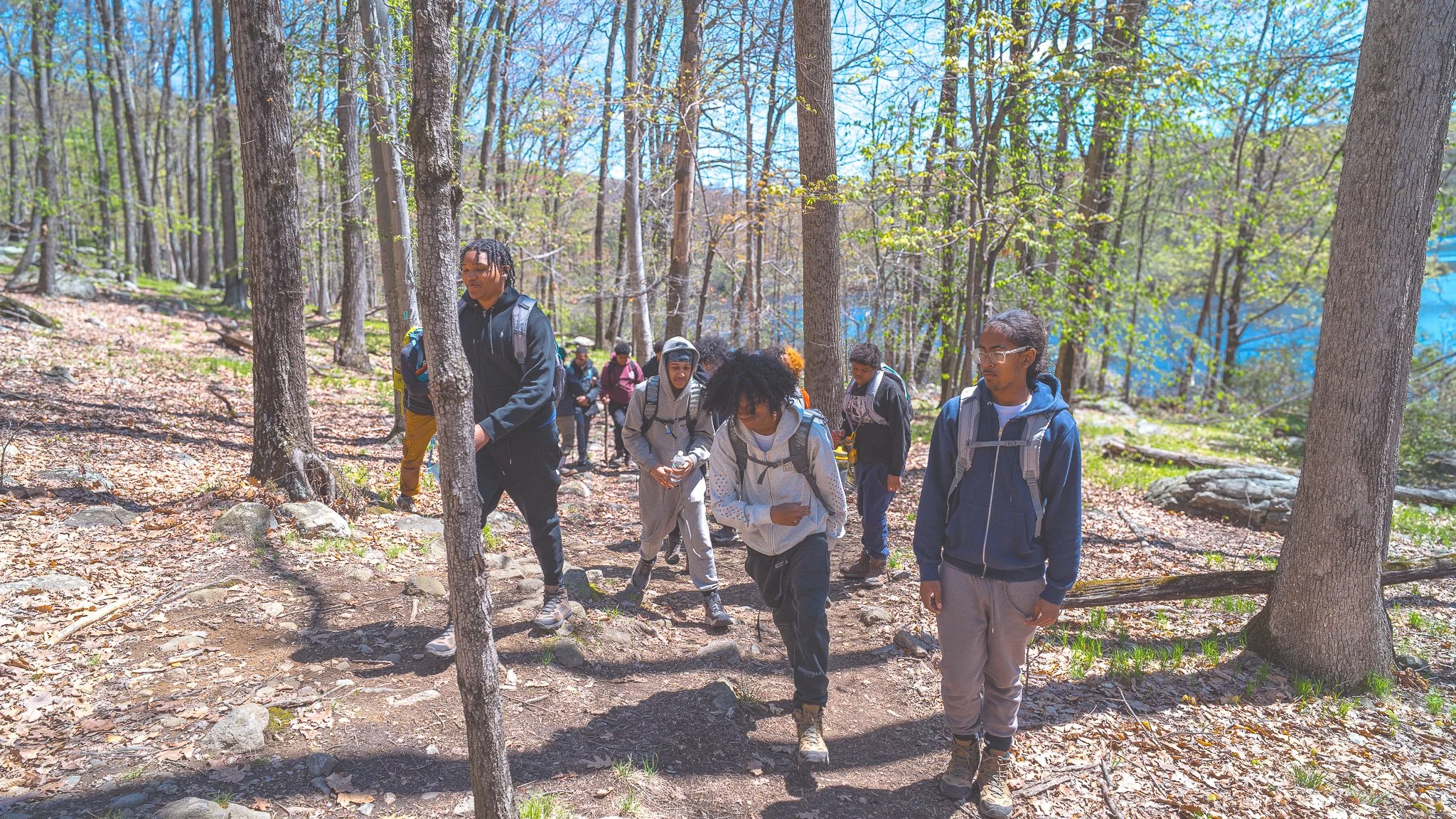
They have to cook together, hike together, and depend on each other.
The shared challenge, whether pushing through a five-mile hike or managing the discomfort of sleeping in a tent for the first time, creates the conditions for real conversation.
There is also something worth noting for school leaders here: many of the young men Camping to Connect works with have never encountered silence.
Boys from densely urban environments often fall asleep to the rumble of subways and street noise. When Manny takes them into nature and the quiet arrives, it can register as anxiety or even a trauma response.
The program uses that moment intentionally.
The night hike on the first evening, he explained, is designed to walk boys directly through that fear so they can arrive somewhere different by morning.
That journey from fear to peace in a single night is a microcosm of what the broader program does over time.
How the Program Actually Works
For school administrators thinking about what a partnership might look like, it helps to understand the structure.
Camping to Connect works with groups of 10 to 12 young men, intentionally kept small to create intimate conditions for conversation.
The program currently serves participants ages 12 to 24 across New York, Colorado, and Los Angeles, and it has no cost for individual participants.
The weekend experience follows a clear arc:
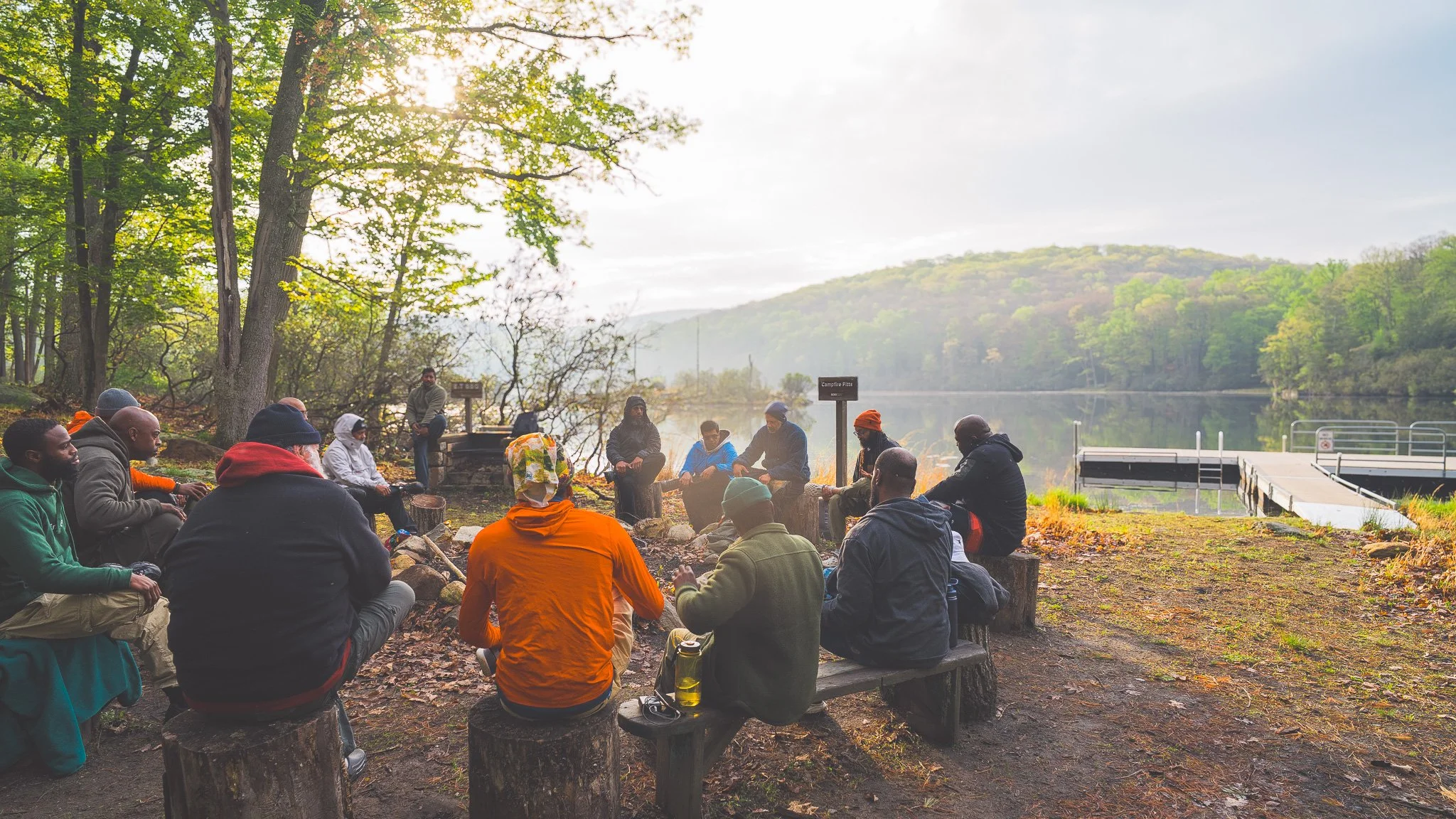
Opening Circle
Participants set intentions and share what they are carrying: a worry, a fear, something happening at home. Facilitators model vulnerability first, which opens the door for the boys.
Community Agreements
The group collectively establishes norms and non-negotiables. These agreements are co-created, not handed down.
Shared Labor
Participants cook, clean, and set up camp in rotating teams. Adults guide, but do not do it for them.
Land Acknowledgment
Done in a culturally grounded way, connecting participants to the history of Indigenous peoples and the parallels with their own ancestral stories of displacement and resilience.
Peaks and Valleys Reflection
At the end of each day, the group gathers around the campfire to name a high point and a low point. This structured reflection is where some of the most significant conversations happen.
Manny described a moment that has stayed with him from year one of the program: a 17-year-old participant, who had grown up largely confined to his apartment because of gang activity in his building, struggled on his first hike.
By the following month, he was leading the group.
The second year, he came back and brought his cousins.
“He was free to be a kid,” Manny said. “He didn’t have to be responsible for anyone else’s well-being.”
He also shared a quieter moment: That boy, while sharing during a conversation around a campfire, mentioned that his valley from the day was thinking he might drown in the lake.
When Manny pressed him on it, the boy explained he had never been in any body of water larger than his own bathtub.
That kind of revelation does not happen in a classroom debrief. It happens when boys feel genuinely safe and known.
What Schools Can Take From This
Educators do not need to have a camping program to learn from what Manny has built.
There are structural and philosophical principles here that translate directly into school practice.
Shared Experience Breaks Down Walls That Curriculum Cannot
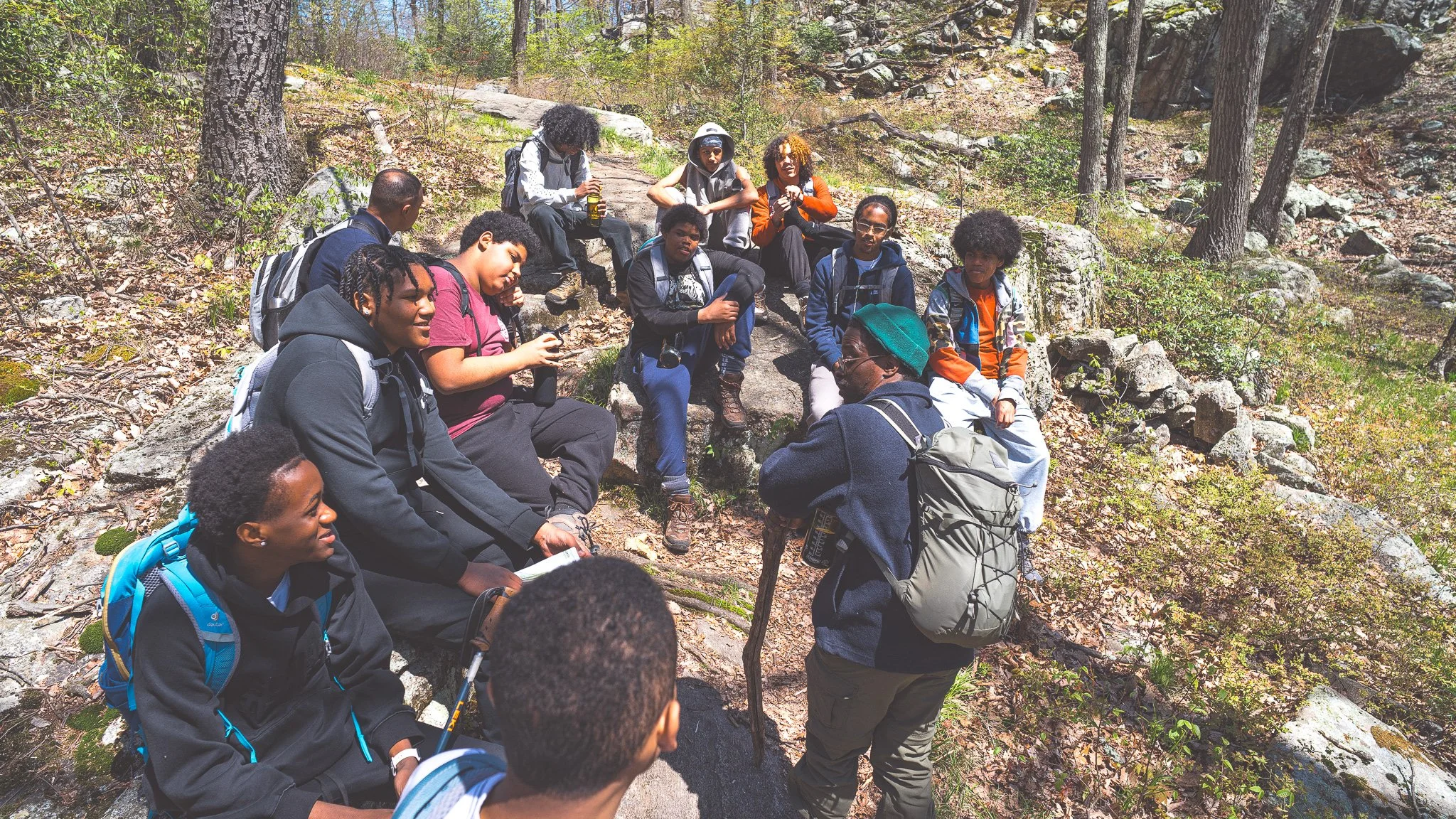
The most powerful SEL work Camping to Connect does happens during a hike, around a campfire, or while cooking dinner together.
The content is not the point. The relational context is.
Schools that place students in shared challenge experiences, whether through outdoor education, service learning, or peer accountability structures, create conditions for similar openness.
Men of Color as Mentors Is Essential
Manny was direct about this: not just any volunteer will do.
Facilitators need emotional intelligence and cultural proximity.
For schools serving Black and Latino boys, this has implications for hiring, mentorship programs, and advisory assignments.
Vulnerability Has to Be Modeled by Adults First
The opening circle works because facilitators go first.
They name something real before asking a young person to do the same.
This is something every advisor, counselor, and dean can practice.
Small Groups Change Everything
The program deliberately caps participation at 10 to 12.
Meaningful connection does not happen at scale.
Schools can apply this by examining the structure of advisory periods, mentorship groups, and affinity spaces.
The Pipeline Manny Didn’t Plan For
One of the most promising outcomes of Camping to Connect was not in the original program design.
Young men who went through the program as teenagers have returned as young adults. First as junior facilitators, then as full leaders.
Some came back from nearby universities on weekends just to be part of a hike.
Others are now moving through a fast-track apprenticeship model designed to formalize this pathway.
“They learned something,” Manny said. “And they can pass it down without having to wait seven years to do it.”
For schools, this is the long game of relationship-based programming.
Young people who feel genuinely seen and supported do not just benefit from the experience. They often turn around and carry it forward.
That is not an outcome you can manufacture with curriculum alone.
It is the natural result of an environment built on genuine belonging.
Bringing It Back to the Table
If there is one thing this conversation clarified, it is that the teen social isolation crisis will not be addressed through awareness alone.
It requires environments, structures, and adults willing to show up differently.
Manny Almonte built something extraordinary from a simple premise: men who had done the work of becoming more open and accountable could share that with their younger selves.
The outdoors became the container. Brotherhood became the method. Transformation became the result.
Schools serving young men of color, and frankly all schools paying attention to what is happening to adolescent boys, have something to learn from this model.
Not necessarily a camping program, but the philosophy underneath it:
Connection is the intervention.
To learn more, visit:
Manny’s award-winning short film, Wood Hood, also offers a powerful window into what this work looks like in practice.