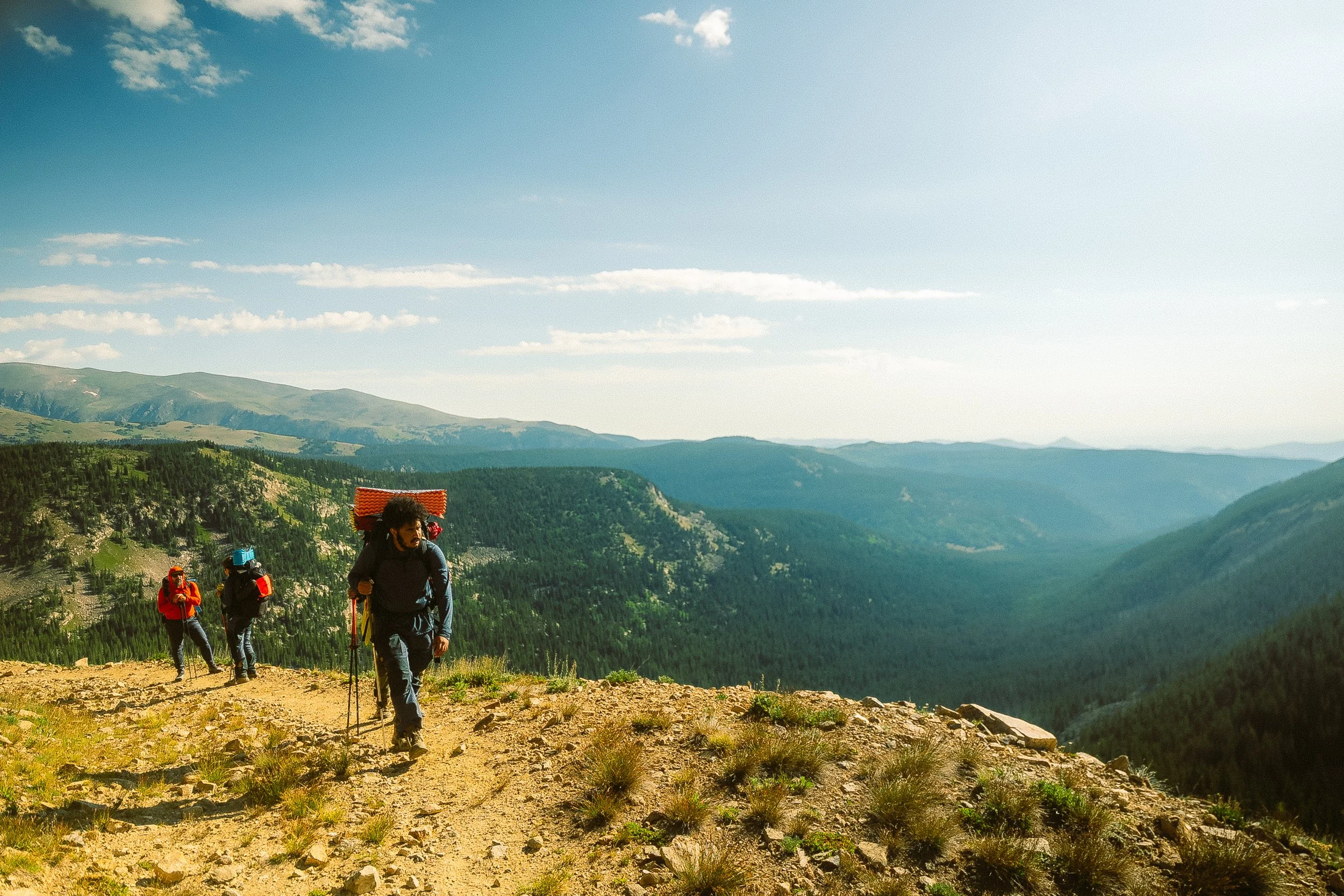
Backpacking at 12,000 Ft of elevation, Fjällräven Classic USA 2026, Continental Divide, Nederland, CO
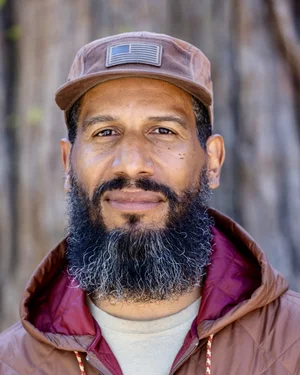
A field note by Manny Almonte | Founder & CEO, Camping to Connect
On Christmas Eve 1968, three men became the first humans to see the far side of the moon. Bill Anders took the photograph we now call Earthrise. Years later he described what the mission had actually been for:
“We came all this way to explore the Moon, and the most important thing is that we discovered the Earth.”
That sentence is the argument of my life’s work, said better than I will say it. I believe that exploration begins with connection. And here’s my case.
The work I do at Camping to Connect does not start on the Continental Divide. It starts an hour outside the city, in a state park in New York, New Jersey, Denver, or even now in Los Angeles, on a Friday night, in a tent. It is a collective effort rooted in service to community. And, if I’m honest, it is also personal: I need that connection to community, too.
I want to be precise about this, because the mountain photographs mislead people. Since 2018 we have run local hikes and camping weekends for teenagers from across New York City, and since 2021 for teenagers in the Denver metro area, in the state and national parks close enough to reach by van. Most of these young men have never slept outside. Plenty of them arrive unsure they want to go on a hike at all, let alone lie down in a nylon tent in the dark and close their eyes.
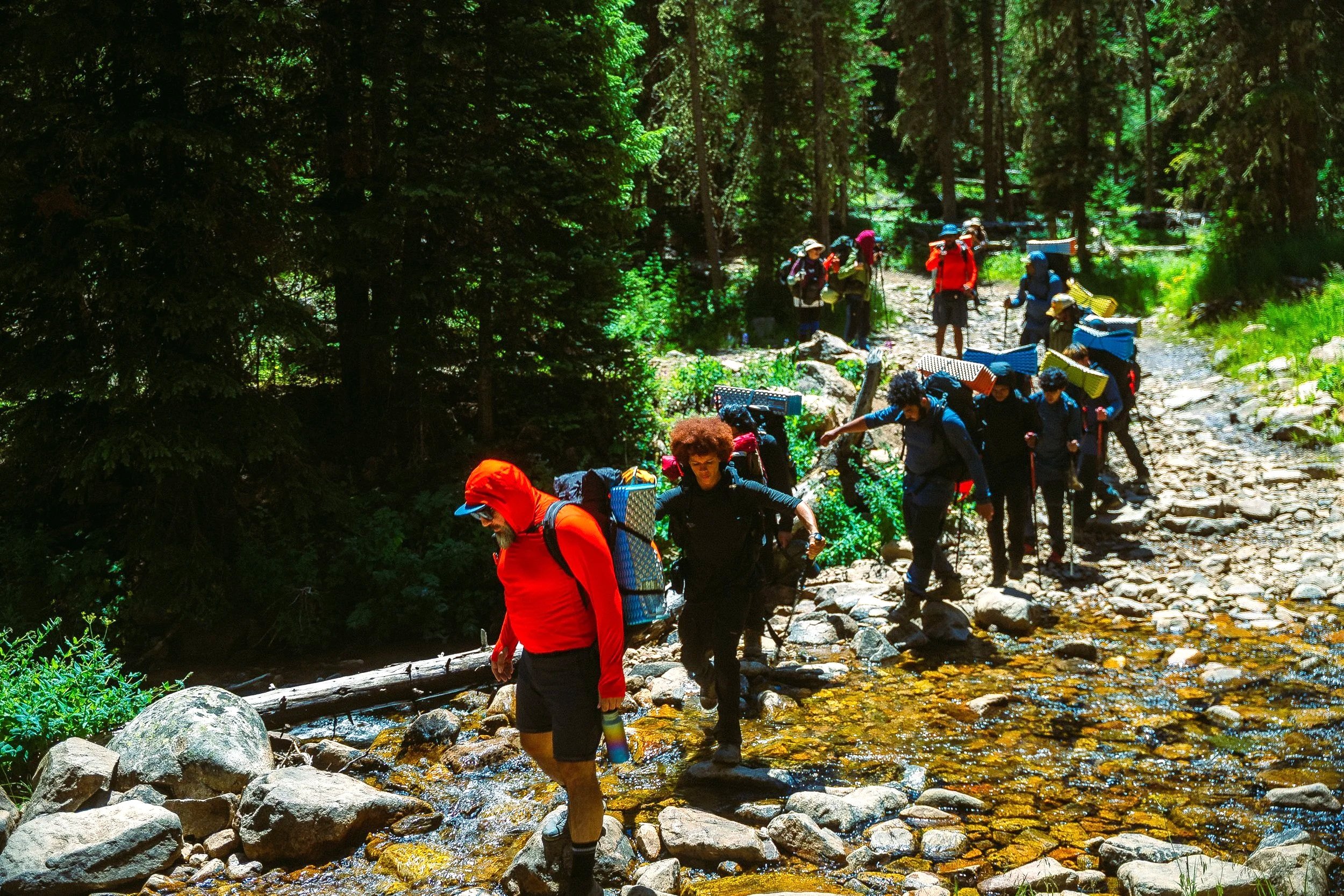
Camping to Connect team 5 backpack the US Continental Divide. July 2026, Nederland, CO
That first night is the threshold. Everything else is downstream of it. They hike together, cook together, clean up together, and at the fire we go around and each of them names the high point and the low point of his day. Somewhere in there, something happens that has nothing to do with the outdoors. A young man starts talking. He says a thing in a circle of other young men that he has never said at home or at school.
The big trips come later, and only for some of them who earn them. Since 2021 our New York teams have section-backpacked the Appalachian Trail from Connecticut into Massachusetts. For the past four years I have taken selected teams roughly thirty miles across the Continental Divide over four days at 12,000 feet, where they learn to read a map, set a remote camp, and move a group safely through terrain that does not care who they are. The former is something that I learned to do one hike at a time, while camping in sites and with gear made available by the Appalachian Mountain Club, which also trained our team in Outdoor Leadership Training. The latter was something I learned in 2022 through an invitation I received by Fjällräven to join their annual Fjällräven Classic experience in Colorado. Fjällräven Classic is a series of multi-day, self-supported treks in spectacular locations. Alongside people from all walks of life, one gains the experience, confidence, and self-reliance to continue one’s journey and pass on the knowledge to others once home, which I did, now leading a team of 12 young men from NYC and Denver every year, all sponsored and outfitted by Fjällräven.
But that is the graduation, not the intervention. The young man walking at 12,000 feet is the same one who a few years earlier was not sure he could sleep in a tent forty minutes from his apartment. The mountain is what became available to him. It is not what changed him.
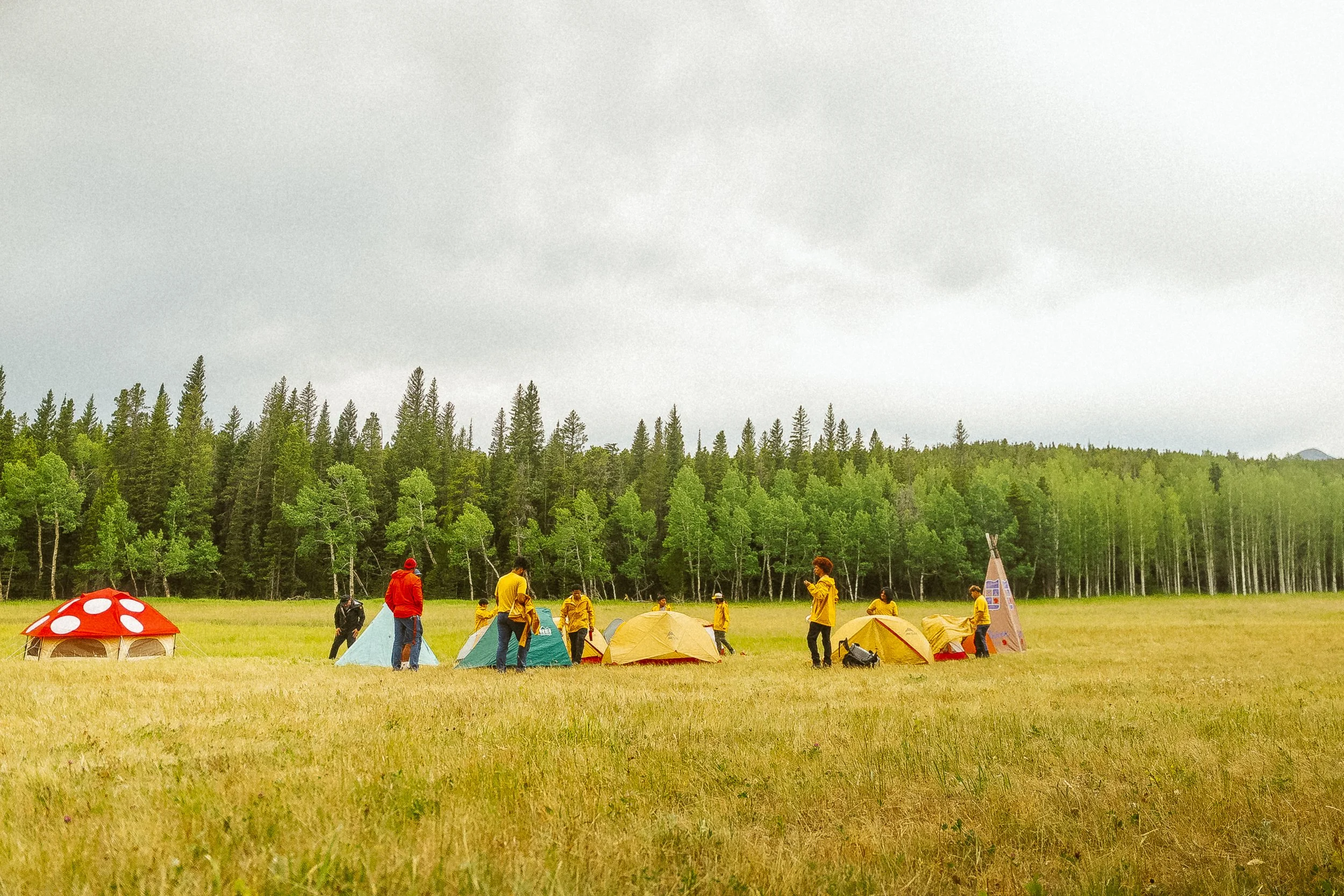
Camping to Connect participants pitching their tents in Nederland, CO
For years I described talking as the side effect of the trip. I had the order backwards. The connection was never the souvenir. It was the thing that made the trip possible.
Here is how I learned it, and it did not start with the boys.
I grew up in Santo Domingo, the capital of the Dominican Republic, but my family is from Bonao, in the foothills of the Cordillera Central. That range holds Pico Duarte, the highest peak in the Caribbean. I spent my childhood summers up there, at camps, around campfires, with a mountain range as the backdrop of my family’s story. Then I emigrated at nineteen in a pursuit of higher learning. Uptown Manhattan and Brooklyn and twenty years of retail management, nightlife and the constant stressful nature of entrepreneurship took all of it away.
Nobody counts that as a loss. A boy leaves a country with a 10,000-foot cordillera in it, arrives in The City. The world-famous concrete jungle, and the nearest wild place now requires gear he does not own, a car he does not have, and knowledge nobody in his community has either. If fact, as a stranger in a new land, he doesn’t feel he has been given permission to venture out there, since not one person he knows in the tight-knit Dominican community feel like they do.
I got it back in September, 2016, because two incredible humans invited me. My wife and I went camping at Lake George with our dear friends Stefon Davis and Ronnie Pichon, who love adventure and had every piece of gear plus spares to lend. We pitched our tents, started a campfire, cooked some delicious food and had great conversations over a bottle of red wine, then woke up the next morning to the sweet smell of breakfast Ronnie was cooking on a portable stove. They showed me something I did not know: you can reserve a campsite through a website and sleep next to a lake. They offered us the gear any time we wanted to go on our own.
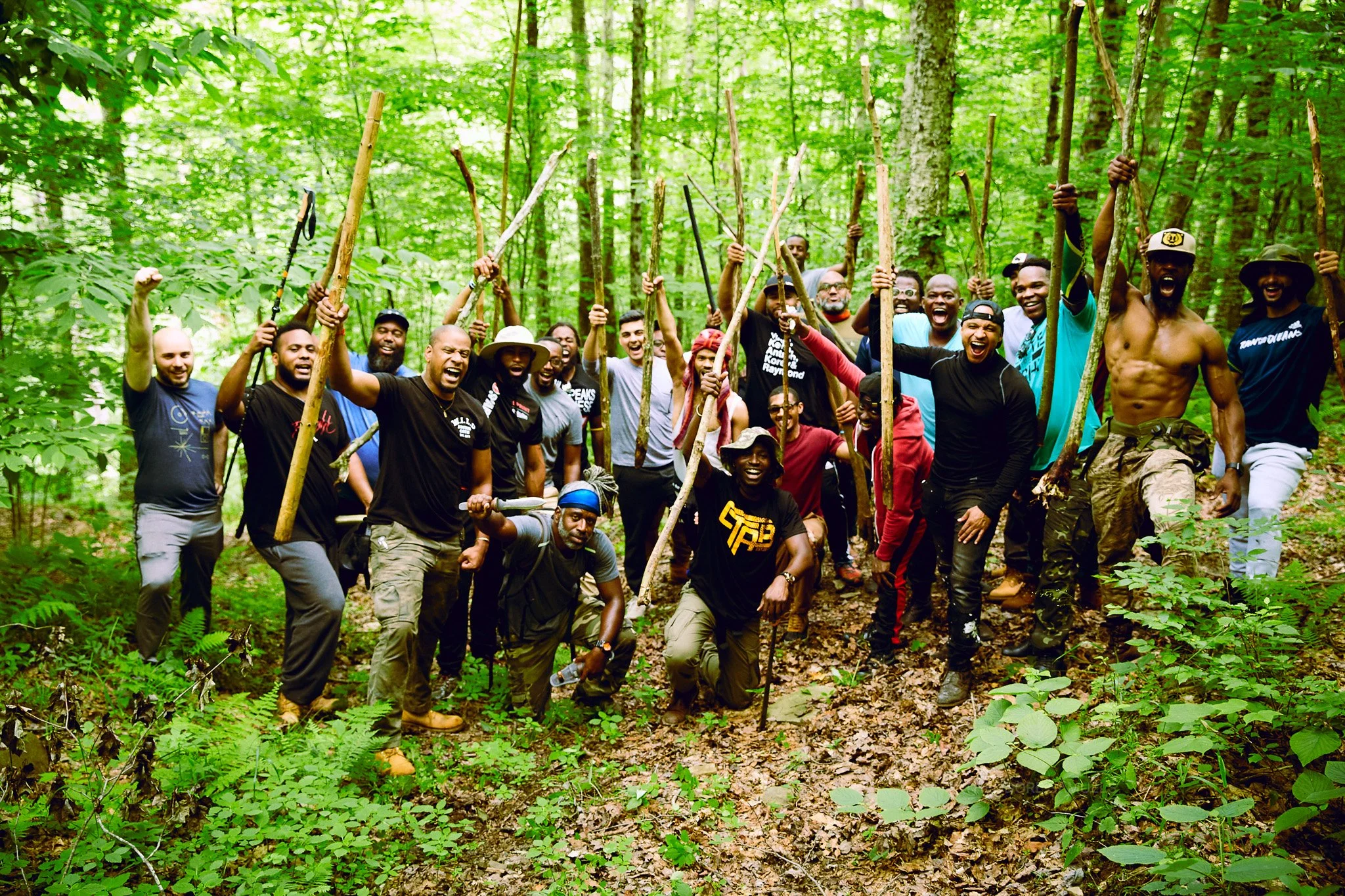
Mastermind Connect members camping for the first time, Upstate, NY, 2017
That is the whole mechanism of exclusion, and it has nothing to do with desire. It is gear, knowledge, and an invitation. I was given all three. Everything I have built since is an attempt to hand the same three things to men and boys from traditionally underserved communities who have not been given any of them.
Around 2015, before any of the camping, a group of us had started meeting as grown men, because we had all noticed the same thing about ourselves: we had been trained to compete with each other, not to connect. We showed up and performed. Salaries, new cars, wins. Nobody said what was actually happening behind the curtain. That’s when the Mastermind Connect men’s collective was born. In June, 2017 I took us into the woods, forty acres in Andes, New York, no running water, no power, no signal, on gear I borrowed from Stefon and Ronnie, and others who answered the call. I asked every man there to leave something behind in the woods. Regret, anxiety, fear. Pick one and put it down.
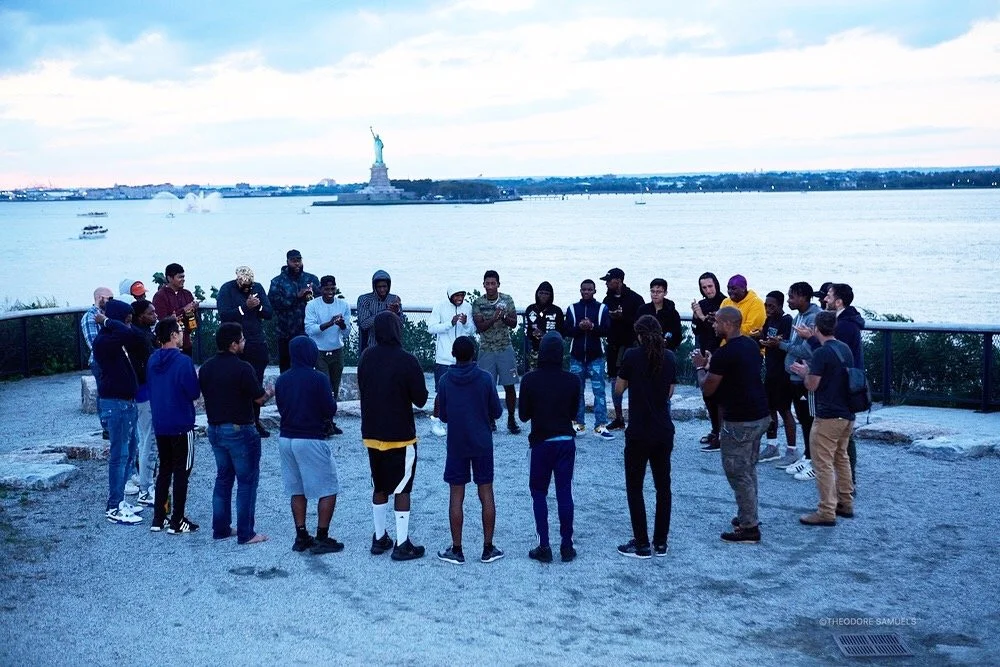
We called that weekend Camping to Connect. A year later we did it again, and with the help and inspiration from Andy Isaacson, who had recently participated in a nature-based rite-of-passage experience in California, and gear we borrowed from CatRock Ventures in the Bronx, we ran the same thing for teenagers on Governors Island at the end of the Summer. The order matters: the men did the work on themselves first. I am not describing a curriculum I designed for other people’s children. I am describing something I needed, and nature provided via brotherhood and time outside.
The claim. The urge to explore a trail, a mountain, another country, Antarctica or the moon begins with the urge to explore oneself. And no one explores themselves from nowhere. Self-knowledge requires a place to stand: connection to your body, to your environment, to other people. So connection is not the reward at the end of exploration. It is the precondition at the start of it.
The science says so plainly. In 1970 Mary Ainsworth and Silvia Bell put one-year-olds in an unfamiliar room and watched. When the mother was present, the children explored. Ainsworth’s phrase for her was a secure base from which to explore. Remove her, and exploration did not merely become less fun. It stopped. Insecurity does not dampen the impulse to explore; it suppresses the behavior. Bowlby’s own definition names the population I work with: “a secure base from which a child or an adolescent can make sorties into the outside world.” Ryan and Deci’s self-determination theory carries it across the lifespan, naming relatedness as one of three basic psychological needs and predicting that curiosity flourishes only “in contexts characterized by a sense of security and relatedness.”
The exploration establishment says so too. NASA maintains a formal mission risk titled Risk of Performance and Behavioral Health Decrements Due to Inadequate Cooperation, Coordination, Communication, and Psychosocial Adaptation within a Team. Its select-in astronaut competencies include Teamwork, Small Group Living, and Leadership-Followership. The agency that reached the moon screens for the capacity to connect. Shackleton’s twenty-eight men survived twenty months on the ice because he managed cohesion as carefully as rations.
The old texts got there first. Thoreau tells the reader who wants to travel farther than all travelers to instead “obey the precept of the old philosopher, and Explore thyself. Be rather the Mungo Park, the Lewis and Clark and Frobisher, of your own streams and oceans.” Every tradition I know sends its people into wilderness before it sends them into leadership: Sinai, forty days in the desert, the cave at Hira, the Bodhi tree, the Desert Fathers who walked into Egypt alone and accidentally invented the monastery. Bonhoeffer: “Let him who cannot be alone beware of community. Let him who is not in community beware of being alone.” And the philosophy we run on, formulated by John Mbiti: I am because we are.
Why it matters practically. Nearly three-quarters of communities of color in this country live in nature-deprived areas, and the Surgeon General has advised that we are in an epidemic of loneliness. Those are treated as two problems. They are one. A young man who has never been securely connected to anyone has no base from which to go anywhere, and we then call him unmotivated.
So we do not start by teaching exploration. We start by building the base, twelve young men at a time, because connection does not happen at scale. We give them the experience of being connected: to a mountain, to a circle of peers who look like them, to a version of themselves that only shows up when the phone has no signal. The exploration follows on its own. It always has.
The astronaut Nicole Stott, after 104 days in orbit, put the whole thing in two sentences:
“The greatest skill we could learn as Earthlings is how to be crewmates and not passengers.”
“You don’t have to fly to space to understand these things.”
She is right. You can learn it at 12,000 feet with a map in your hands and someone behind you counting on you to read it right. You can also learn it in a state park forty minutes from the Bronx, on your first night in a tent.
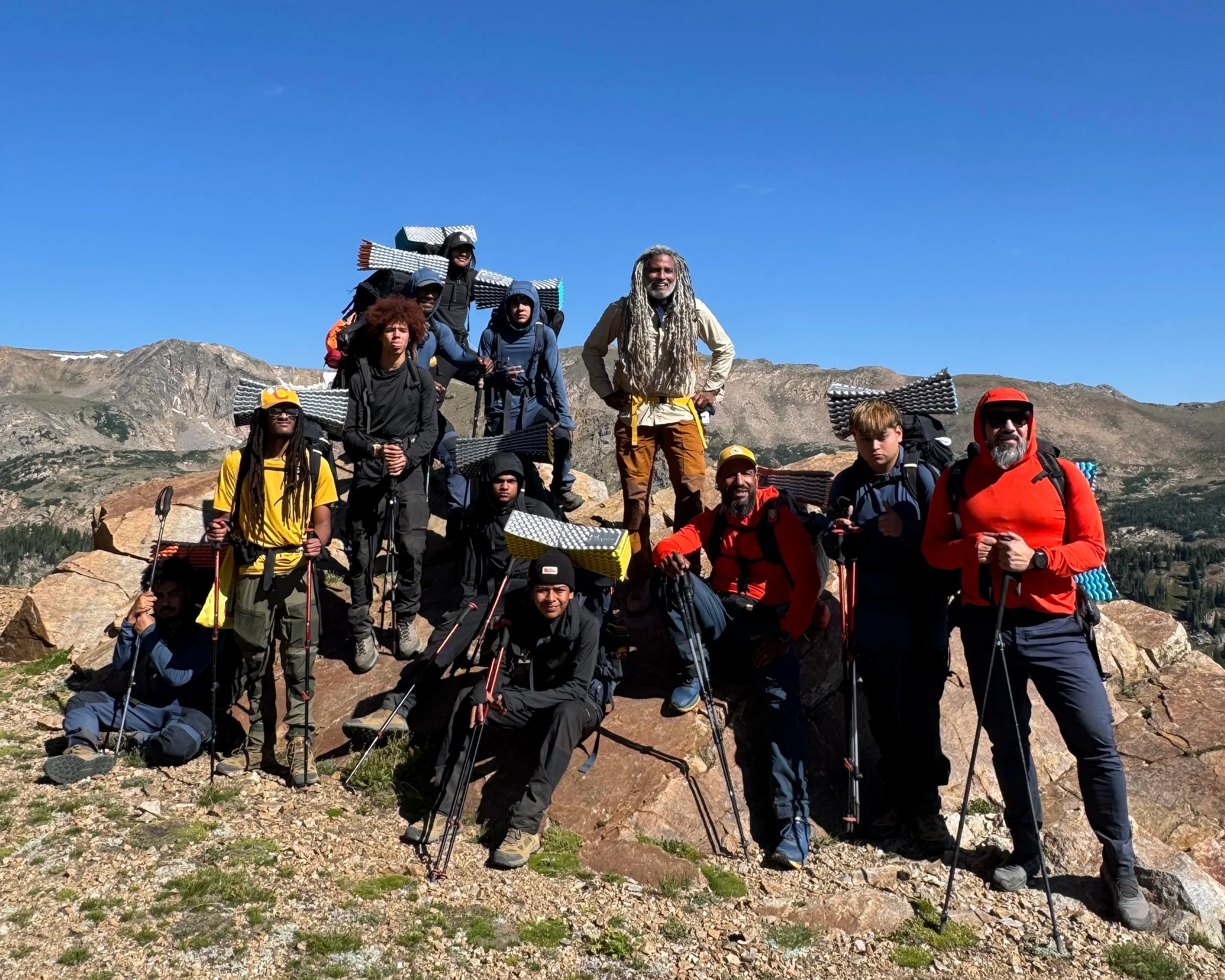
Camping to Connect team at the Fjällräven Classic USA, July, 2026.
Or you can learn it the way 17 year old Malachi, one of our young men did, on his first camping weekend with us. At the campfire during the second night we went around naming the high point and low point of the day. His low point was that he had been afraid he would drown in the campground’s nearby pond, a moment we had rewarded the boys with after a 7-mile hike during a hot New York Summer. I asked him about it. He told me he had never been in any body of water bigger than his bathtub. He had spent most of his childhood inside his apartment, because there was gang activity in his own building and the street was not safe.
Within a month he was leading the group. The next year he came back and brought his cousins.
Nobody taught that young man to explore. We gave him a base, and he went.
Camping to Connect is a BIPOC-led outdoor mentorship program serving young men of color, ages 12 to 24, in New York City the Colorado Front Range, and as of September 2026 in Los Angeles, CA. All programming is provided at no cost thanks to individual donors and grants. Learn more at campingtoconnect.org.
Sources: Ainsworth & Bell, Child Development 41(1), 1970, p. 60. Bowlby, A Secure Base, 1988, p. 11. Ryan & Deci, American Psychologist 55(1), 2000, p. 70. NASA Human Research Program Evidence Report, 2022. Thoreau, Walden, “Conclusion,” 1854. Bonhoeffer, Life Together, trans. Doberstein, 1954, p. 77. Mbiti, African Religions and Philosophy, 1969, p. 215. Anders quoted in NASA Science, “Remembering Bill Anders,” 2024. Stott interviewed in Space.com, 21 October 2021. Conservation Science Partners / Center for American Progress, 2016. U.S. Surgeon General’s Advisory, 2023.